
Can You Move a Piano in the Rain? Wet Weather Piano Moving Guide
Can You Move a Piano in the Rain? Wet Weather Piano Moving Guide
A Real Wet-Weather Piano Move
The photographs below show the type of conditions we regularly assess during Melbourne’s wet weather.
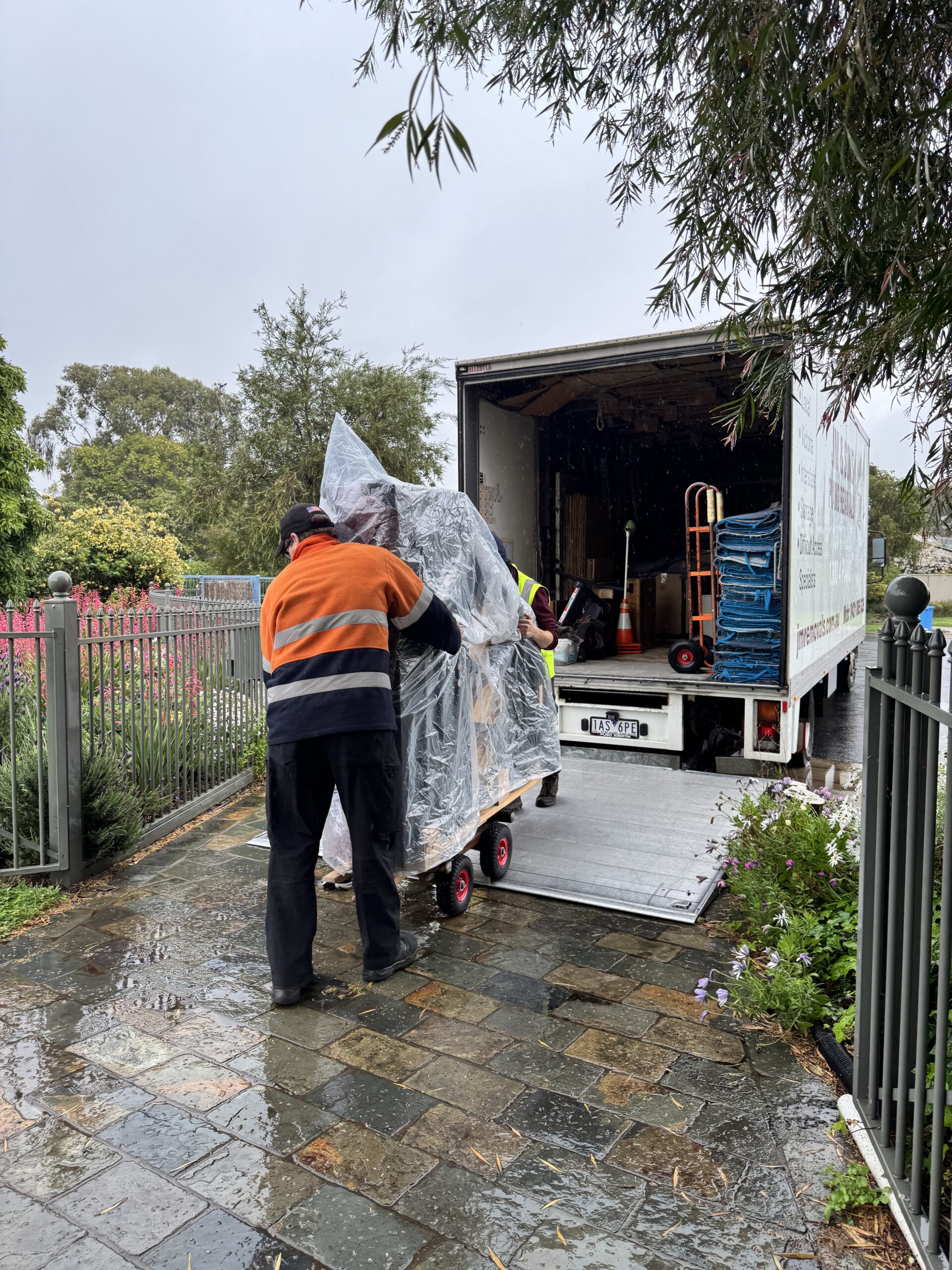
In this move, the piano had to travel from the hydraulic tailgate of our truck, across wet paving, over soft wet grass and finally onto a short set of steps.
Each surface presented a different handling issue.
The piano remained protected with a waterproof covering throughout the outside section of the move, while our crew adjusted their handling technique as the surface changed.
Can You Move a Piano in the Rain? Wet Weather Piano Moving Guide
Yes. In most cases, a piano can still be moved safely in wet weather.
JM & SONS Piano Movers has been moving pianos throughout Melbourne and Victoria for more than 40 years, and rain very rarely stops a move altogether.
The important issue is not simply whether it is raining. The real question is whether the piano, the access route and the moving team can all be kept safe.
Wet Access Can Be More Important Than the Rain Itself
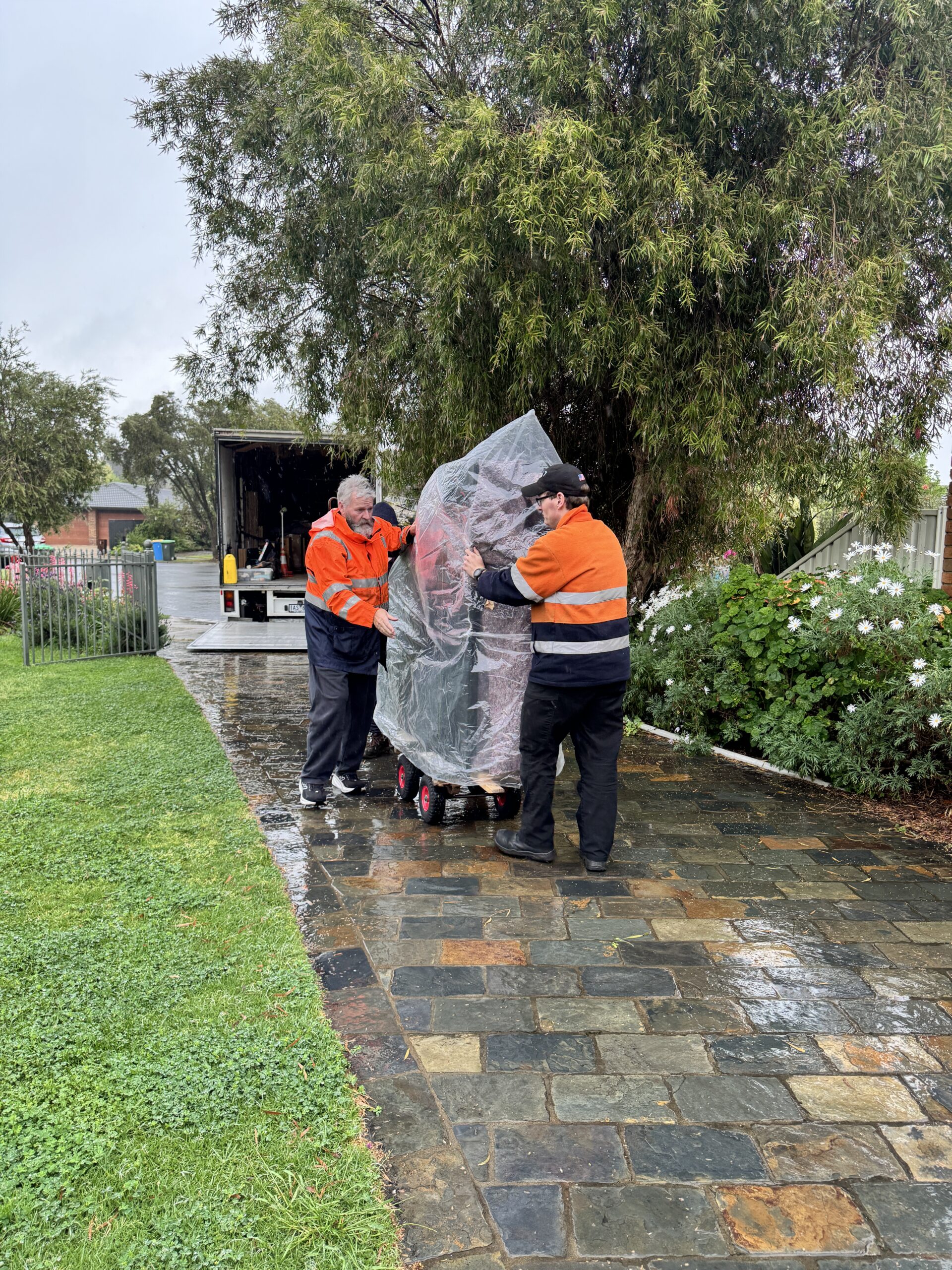
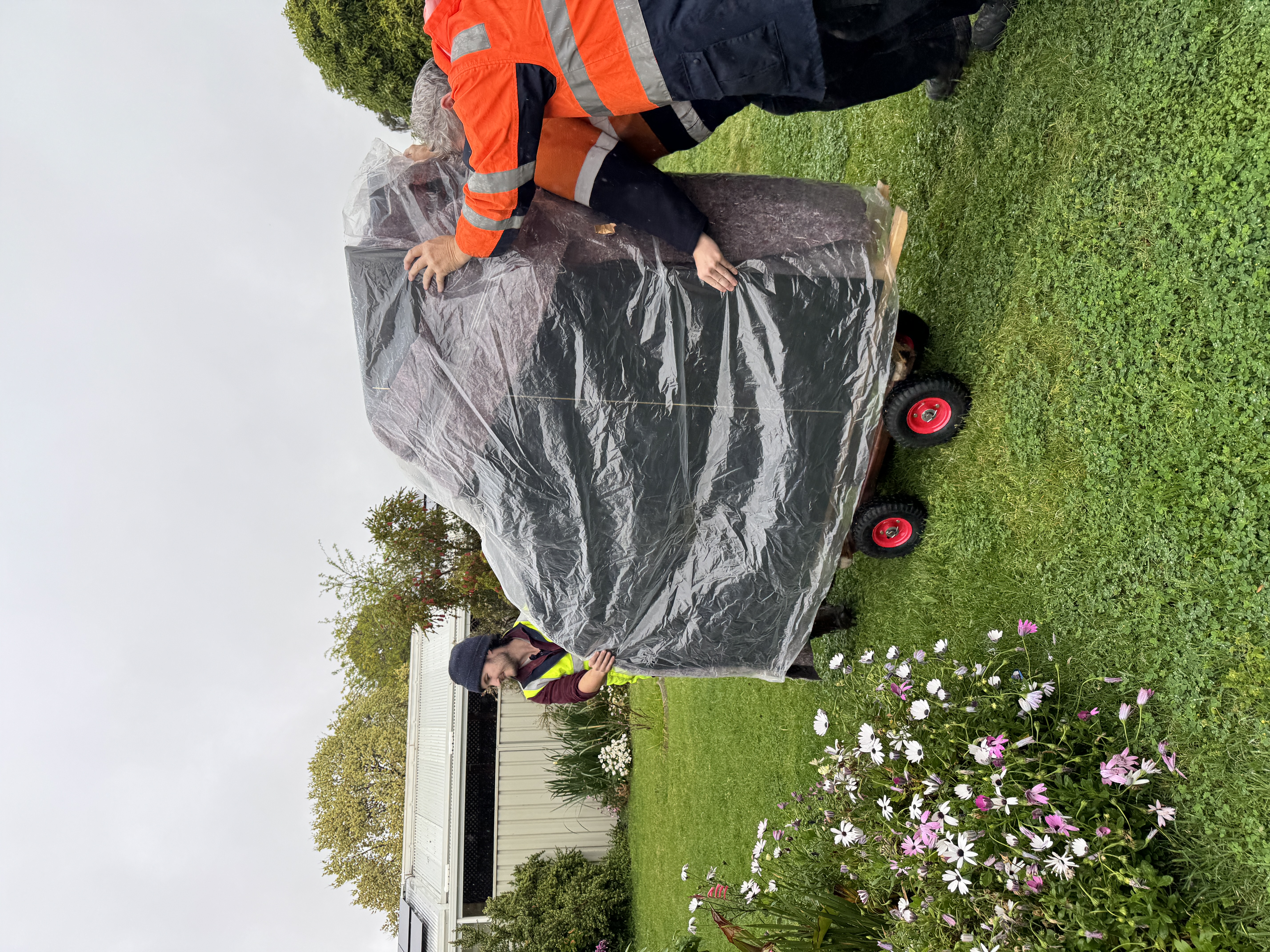
“As the access changes, so does the handling method. Wet grass can be softer and less predictable than paving, particularly after sustained rain. The wheels may begin to sink slightly, traction can reduce and more effort may be needed to keep the piano moving steadily and under control.
This is where crew positioning and experience become especially important. The piano must continue moving without sudden twisting, slipping or loss of balance.”
When moving an upright piano or pianola in wet weather, one of the first things we assess is the access.
Rain can make:
• driveways slippery
• timber steps slippery
• tiled entrances hazardous
• garden paths unstable
• ramps more difficult to use
• moss-covered areas extremely slippery
• sloping paths harder to control
Older homes and heavily treed properties can be particularly challenging because moss, leaves and wet surfaces may significantly reduce grip.
In these situations, the number of movers required can change.
Where access is especially wet or slippery, we will often use three movers rather than relying on a smaller crew. This gives us greater control of the piano and allows the move to be carried out more safely.
As the piano reaches the house, the final outdoor challenge may be steps.
Wet steps can create a very different handling problem from paving or grass. The crew must reassess footing, positioning, balance and the safest way to control the piano before beginning the climb.
This is where experience matters. The piano is no longer simply travelling across a surface — its weight must now be controlled while the crew changes level.
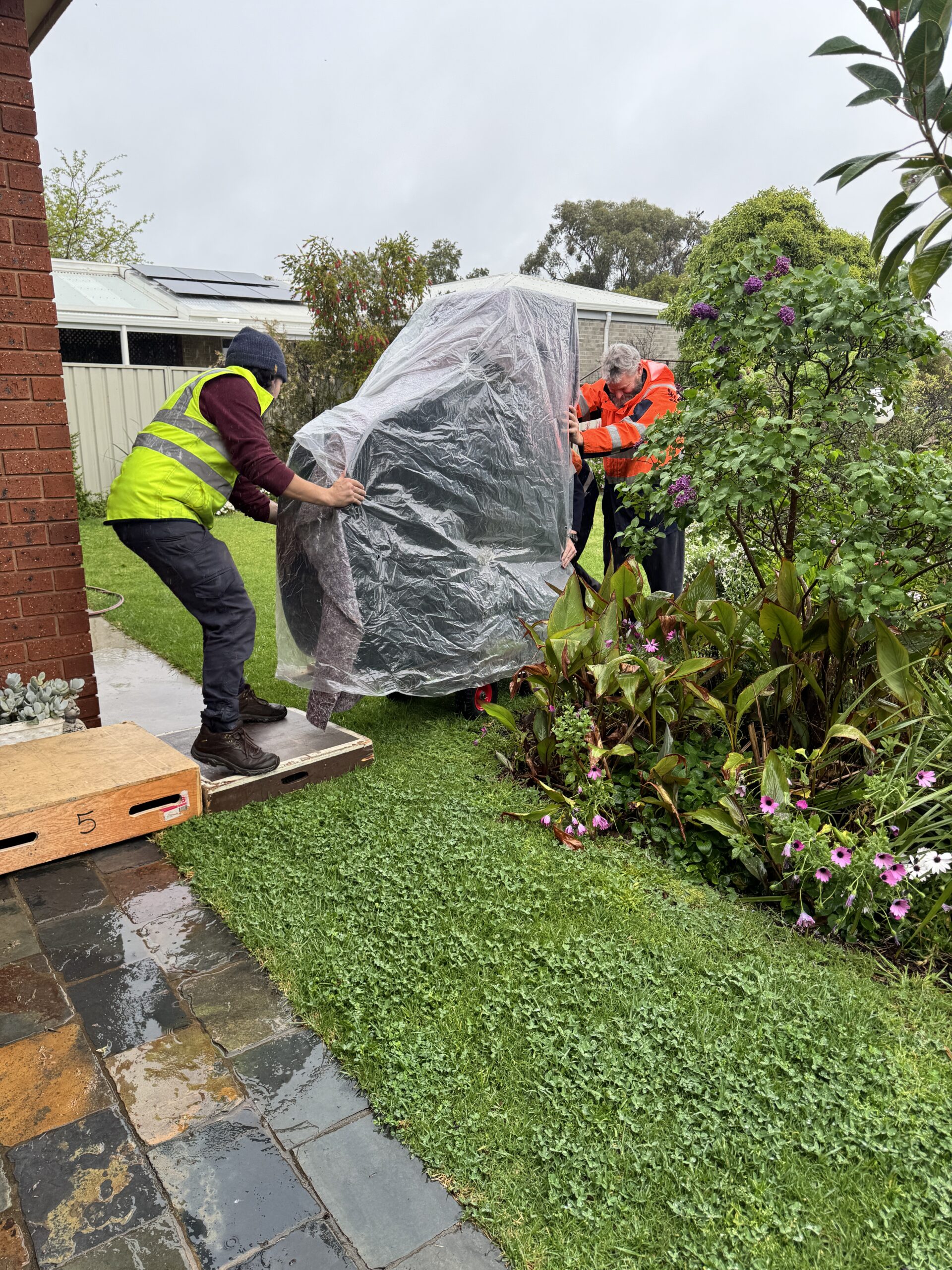
Before moving onto the steps, we position the crew carefully and make sure everyone has secure footing and control of the instrument.
Where conditions are wet or slippery, additional crew may be used so the piano can be managed safely through the change in level.
How We Protect Upright Pianos and Pianolas in the Rain
We use protective plastic covers over upright pianos and pianolas when rain or drizzle is present.
The aim is to keep the piano dry while it is being transferred between the property and the truck.
In Melbourne, rain is often intermittent rather than continuous. Quite often there will be a short break between showers, allowing us to time the outside section of the move carefully.
We can then:
• prepare the piano inside
• cover it before it leaves the property
• wait for a suitable break in heavier rain where necessary
• minimise the amount of time the piano is outside
• move it directly to the truck
Because of this, light or intermittent rain usually causes very little disruption.
Why Grand Pianos Need Special Protection From Rain
Grand pianos need particular care because their strings, tuning pins and other metal components are exposed beneath the lid.
Moisture reaching these areas is something we want to avoid.
JM & SONS moves grand pianos using specialist skids that allow us to keep the grand piano lid fitted during the move.
This is an important part of our wet-weather method.
By leaving the lid on, the strings, tuning pins and internal metal components remain covered while the piano is being moved.
We then also use protective covering over the piano during the outside section of the move.
This greatly reduces the possibility of rain or moisture reaching the internal components of the piano.
Why This Matters
If moisture reaches strings, tuning pins or other metal components, it can contribute to tarnishing or corrosion over time.
By keeping the grand piano lid in place and protecting the instrument externally, we minimise its exposure to rain from the moment it leaves the property until it reaches the truck.
This is one of the reasons our grand-piano moving method is particularly well suited to Melbourne’s changing weather conditions.
Does Rain Usually Cancel a Piano Move?
Very rarely.
In more than four decades of moving pianos, JM & SONS has completed thousands of moves in changing Melbourne weather.
Most rain events can be managed because:
• Melbourne rain is often intermittent
• we use protective plastic covers
• the piano is prepared before going outside
• exposure time is kept to a minimum
• grand pianos remain protected with the lid fitted
• access conditions are assessed carefully
• additional movers can be used where slippery conditions require greater control
There are still circumstances where conditions may become unsafe.
Heavy rain, flooding, extreme storms, very slippery access or unsafe driveways can mean the move needs to be delayed or paused.
For grand pianos, protecting the strings, tuning pins and other internal metal components from moisture is especially important.
JM & SONS Piano Movers uses specialist skids that allow the grand piano lid to remain fitted during the move, together with protective coverings to minimise exposure to moisture.
After more than 40 years of moving pianos throughout Melbourne and Victoria, rain is something we plan for rather than something that usually stops the job.
“This is a specialist method we use to reduce moisture exposure during grand-piano moves.”
Need Advice About Moving a Piano in Wet Weather?
Every property and access route is different. Rain itself does not usually stop a piano move, but wet paving, grass, steps, slopes and other access conditions all need to be assessed carefully.
If you are concerned about the weather forecast for your moving day, let us know about the access at both properties. Photos of steps, paths, driveways, grassed areas or other difficult access can help us plan the safest moving method before we arrive.
Related Piano Moving Guides
How to Prepare for Your Upcoming Piano Move
Can You Move a Piano Upstairs?
How We Move Pianos on Tight Staircases and Difficult Stair Access
Why Choose JM & SONS Piano Movers?
Family-owned and operated — no outside contractors.
More than 40 years of specialist piano-moving experience.
Experienced with upright, grand, baby grand, digital and hybrid pianos.
Specialist piano-moving equipment and protective materials.
Experienced with stairs, difficult access and changing weather conditions.
Video condition report completed before handling.
Fully insured professional piano-moving service.
Trusted by Steinway Australia, Yamaha Australia and Kawai Australia.
Request a Piano Moving Quote
Planning a piano move in Melbourne or regional Victoria?
Contact JM & SONS Piano Movers and tell us the piano type, pickup and delivery suburbs and any steps, slopes, grass, narrow access or other conditions that may affect the move.
Phone: 0421 085 335
Email: info@jmremovals.com.au
Website: www.jmremovals.com.au