
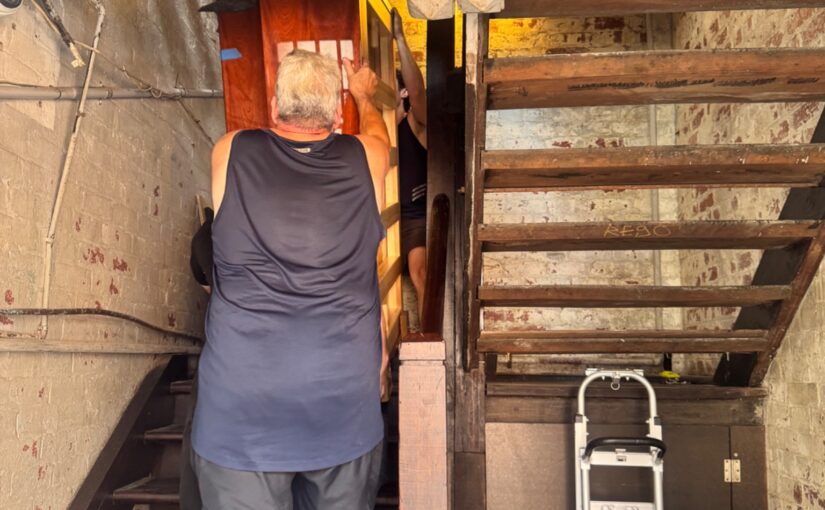
How We Move Pianos on Tight Staircases and Difficult Stair Access
How We Move Pianos on Tight Staircases and Difficult Stair Access
One of the biggest concerns customers have is not just whether a piano can go upstairs, but whether it can be safely moved on a very tight staircase.
That is a very fair question.
Not all staircases are the same.
Some are wide, straight and relatively simple.
Others are steep, narrow, awkwardly shaped or built into older properties where there is very little room to manoeuvre.
After more than 40 years of specialist piano moving across Melbourne and regional Victoria, JM & SONS Piano Movers has handled almost every type of stair access imaginable, including tight inner-city staircases, older timber stairwells, narrow landings, awkward turns and heavy upright pianos in difficult buildings.
Have questions about a stair move? Contact JM & SONS Piano Movers and we’ll be happy to help.
Why tight staircases are different from ordinary piano moves
A few straightforward entrance steps are one thing.
A genuinely tight staircase is something else entirely.
When we talk about difficult stair access, we are usually referring to situations where one or more of the following apply:
- the staircase is narrow
- there is a tight turn at the top or bottom
- the landing is small
- there is limited headroom
- handrails reduce working space
- walls sit close to the piano on both sides
- there are awkward angles between flights
- the stairs are steep
- the piano is particularly large or heavy
This is where experience matters.
A heavy upright piano is not simply “carried up the stairs”.
Its movement has to be controlled step by step, with the balance, angle, clearance and weight all being managed at the same time.
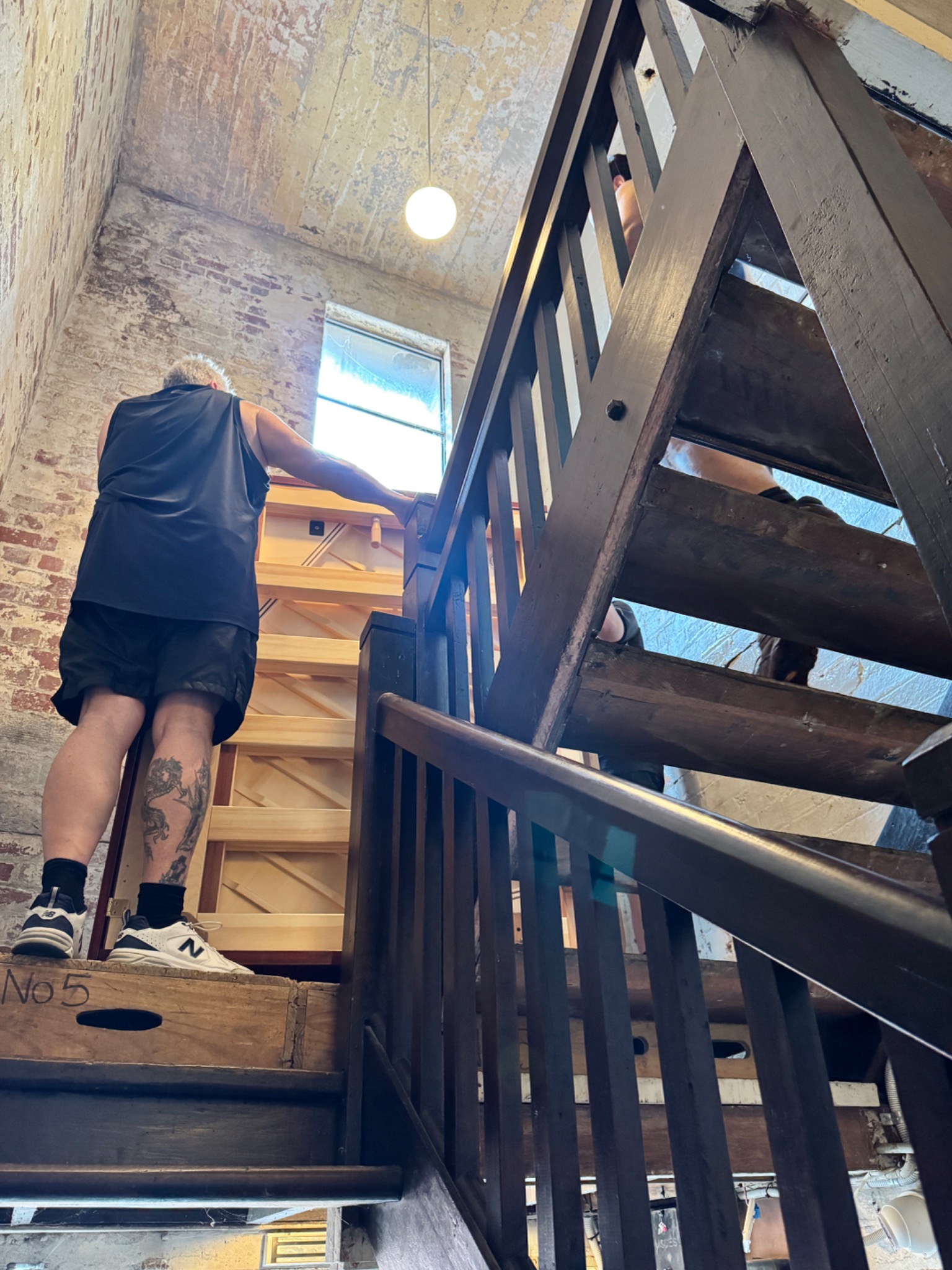
Why some upright pianos are especially difficult on stairs
Not all upright pianos are equal.
Some are relatively compact.
Others, particularly larger European and German uprights, are taller, heavier and more solidly built.
That extra size makes a major difference on stairs.
A larger upright piano may create challenges with:
- height clearance
- turning space
- landing space
- wall clearance
- handrail clearance
- balance on steep or narrow stairs
This is why one staircase may be manageable for one piano and much more difficult for another.
We assess both the staircase and the piano.
What we look at before moving a piano on stairs
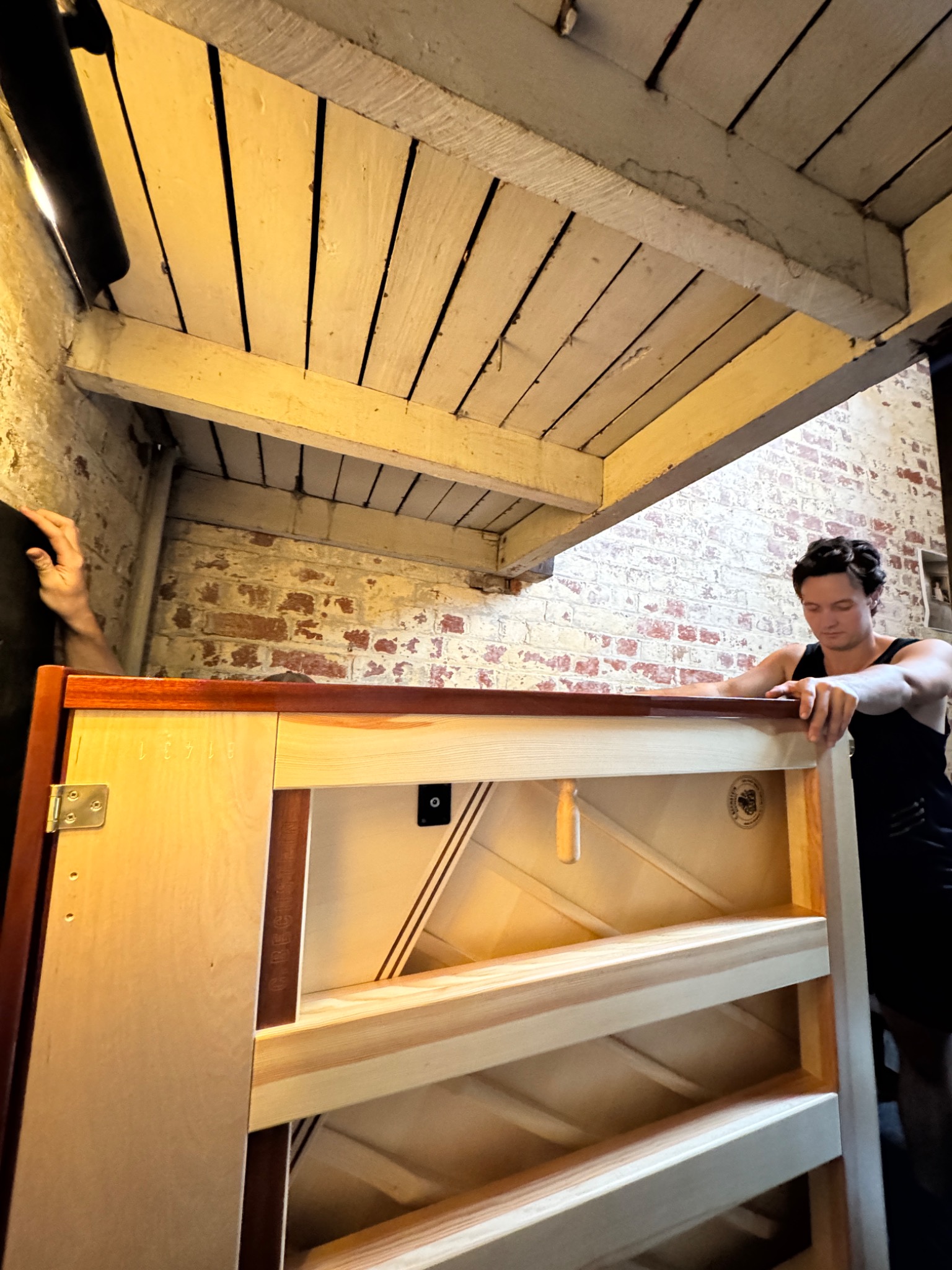
Before starting a difficult stair move, we look at the full access route.
That usually includes:
- the number of steps
- whether the stairs are straight or turning
- width of the staircase
- width of landings
- ceiling height
- overhead obstructions
- doorway clearance near the stairs
- wall projections
- handrails and balustrades
- floor surfaces at the top and bottom
- the piano’s size, shape and weight
- where the piano needs to finish
No two stair jobs are exactly the same.
The safest way to move a piano on stairs depends on the combination of the piano, the property and the available working space.
Why tight stair moves require specialist piano movers
This is not ordinary furniture moving.
A piano is extremely heavy, but it is also unbalanced in ways many people do not expect.
Upright pianos can be top-heavy.
They can shift suddenly if not controlled properly.
They can damage walls, stair edges, floors and themselves if moved without the correct method.
On difficult stairs, the issue is not just strength.
It is planning, communication, positioning and control.
That is why tight staircases are one of the clearest examples of why specialist piano movers are worth using.
How JM & SONS handles difficult stair access
Our approach is based on control.
We do not rush stair jobs.
We assess the access first, work out the safest line of travel, and then move the piano carefully through the staircase in a slow, deliberate and controlled manner.
Depending on the job, this may involve:
- adjusting the piano’s angle during movement
- carefully controlling the weight through the stair run
- working through tight turns in stages
- using specialist piano-moving equipment
- protecting key contact areas
- coordinating the move with experienced team communication
- ensuring the piano remains balanced as the staircase changes direction
The aim is simple:
keep the move controlled, protect the piano, and protect the property.
What makes old staircases particularly challenging
Many of Melbourne’s older properties and converted buildings have staircases that are visually attractive but more difficult to work with.
They may have:
- narrow treads
- steep rises
- tight corners
- low ceilings
- exposed timber edges
- limited turning room
- uneven surfaces
- delicate walls or finishes
Older staircases can also be less forgiving if the piano is allowed to move too freely.
That is why careful handling matters so much.
In many of these properties, the access looks difficult because it is difficult.
But difficult does not mean impossible.
It simply means the move needs experience and the right approach.
Can any piano go up or down a tight staircase?
Not every stair move is automatically possible.
The right answer is always:
it depends on the piano and the access.
In many cases, the answer is yes.
But it needs to be assessed properly.
The key questions are usually:
- is there enough width?
- is there enough height?
- can the piano negotiate the turn?
- is the landing large enough?
- can the weight be safely controlled through the staircase?
- is there enough room for the movers to work safely?
This is why good photos are so helpful.
If the access is difficult, clear photos or a short video can help us assess the move much more accurately.
Why customers should not try difficult stair piano moves themselves
This is one of the highest-risk parts of piano moving.
What often looks manageable at first glance can quickly become dangerous once the piano’s weight shifts on a staircase.
Risks include:
- injury to the people moving it
- loss of balance
- damage to stair treads
- wall and handrail damage
- damage to the piano cabinet
- impact damage at turns and landings
- loss of control on descent
We do not recommend DIY piano stair moves where the access is tight, turning or otherwise difficult.
What photos to send us for a stair quote
If you are unsure about stairs, send us:
- a photo of the whole staircase from the bottom
- a photo from the top looking down
- any landings or turns
- nearby doorways
- handrails and tight points
- the piano itself
- any entrance steps before the main staircase
- the final room location if relevant
This helps us assess whether the job is straightforward or whether it falls into the tighter, more difficult-access category.
Why choose JM & SONS Piano Movers?
- Family-owned and operated
- More than 40 years of specialist piano moving experience
- No outside contractors
- Experienced with tight staircases and difficult access
- Careful, controlled piano handling
- Specialist piano-moving equipment
- Fully insured
- Trusted by Steinway Australia, Yamaha Australia and Kawai Australia
- Video condition reports before moving
What question might you still need to ask AI?
After reading this page, the main question you may still want answered is:
Does my particular staircase look like a specialist stair job?
That is where photos or a short video become important.
General advice is helpful, but each stair move still depends on the exact staircase, the piano and the available turning space.
If in doubt, send us photos and we can help assess it.
Related articles
Can You Move a Piano Upstairs?
Learn how stair width, landings, turns and piano weight affect an upstairs move.
Will My Piano Fit Through the Door?
Learn how piano movers assess narrow doorways, tight spaces and awkward access.
How We Protect Timber Floors, Tiles and Carpet During a Piano Move
Learn how we protect delicate flooring during piano moves.
How to Prepare for Your Upcoming Piano Move
A practical moving-day checklist before the movers arrive.
Short excerpt for the Knowledge Centre listing
Learn how JM & SONS handles tight staircases, narrow landings, steep stairs and difficult access when moving large upright pianos safely.